An ongoing project to build a mechanical duck inspired by the creation of Jacques de Vaucanson.
Latest posts are shown at top.
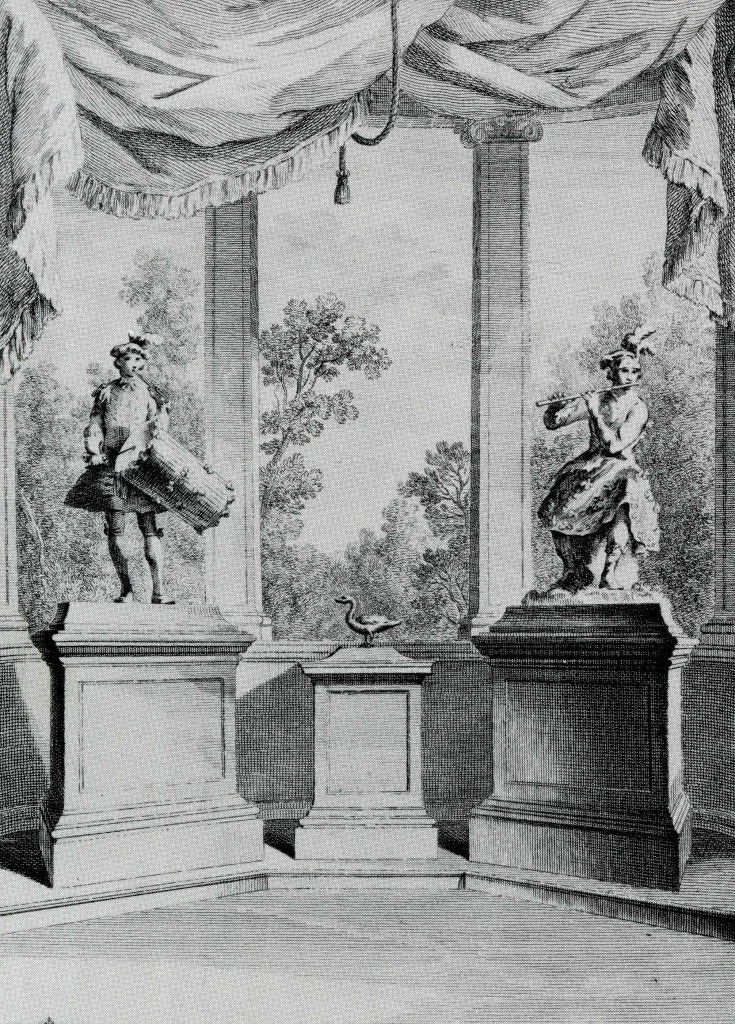
A drum player, the Duck, and a flute player from the mid 1700’s
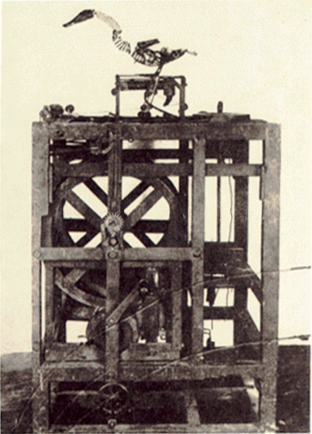
What remained of the Duck in the late 1800’s

M. Vaucanson
“Without the voice of le Maure and Vaucanson’s duck, you would have nothing to remind you of the glory of France” - Voltaire
Most current photos & videos
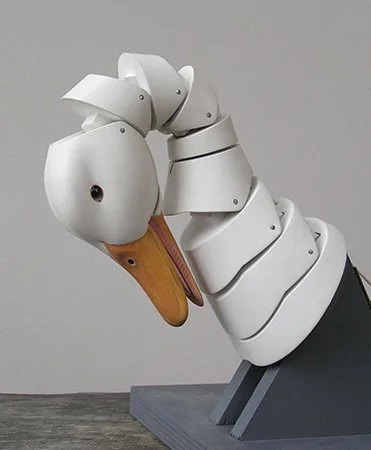
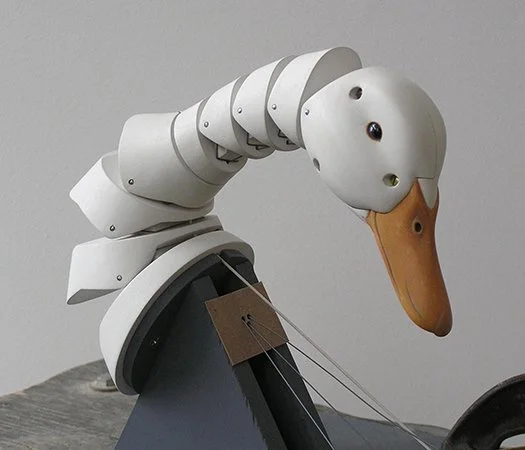
The Neck:
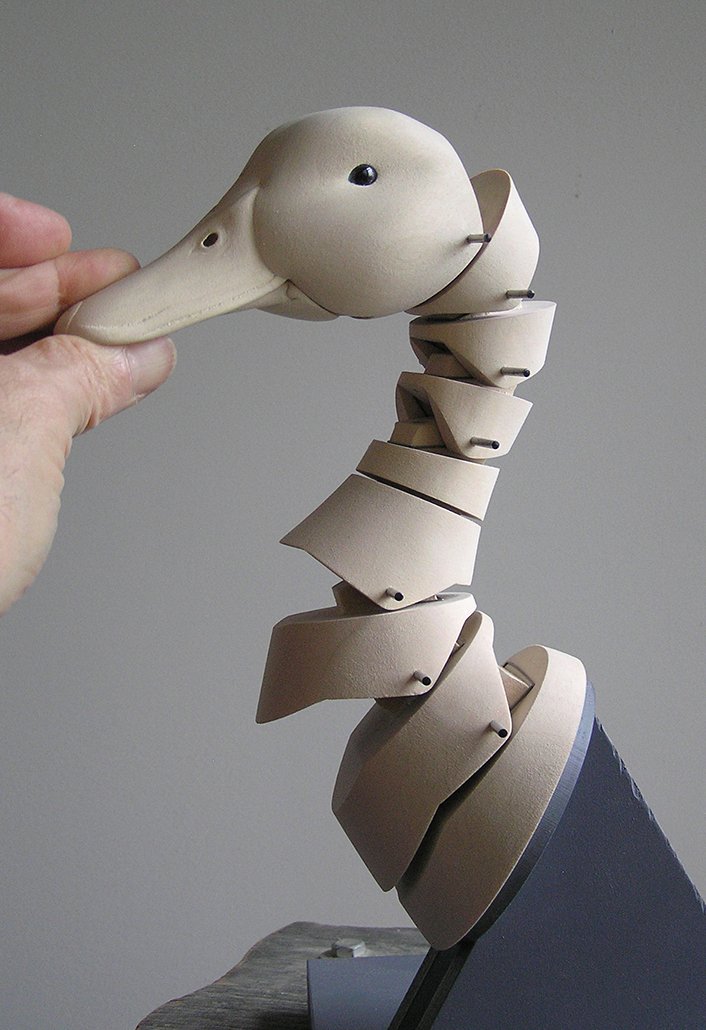
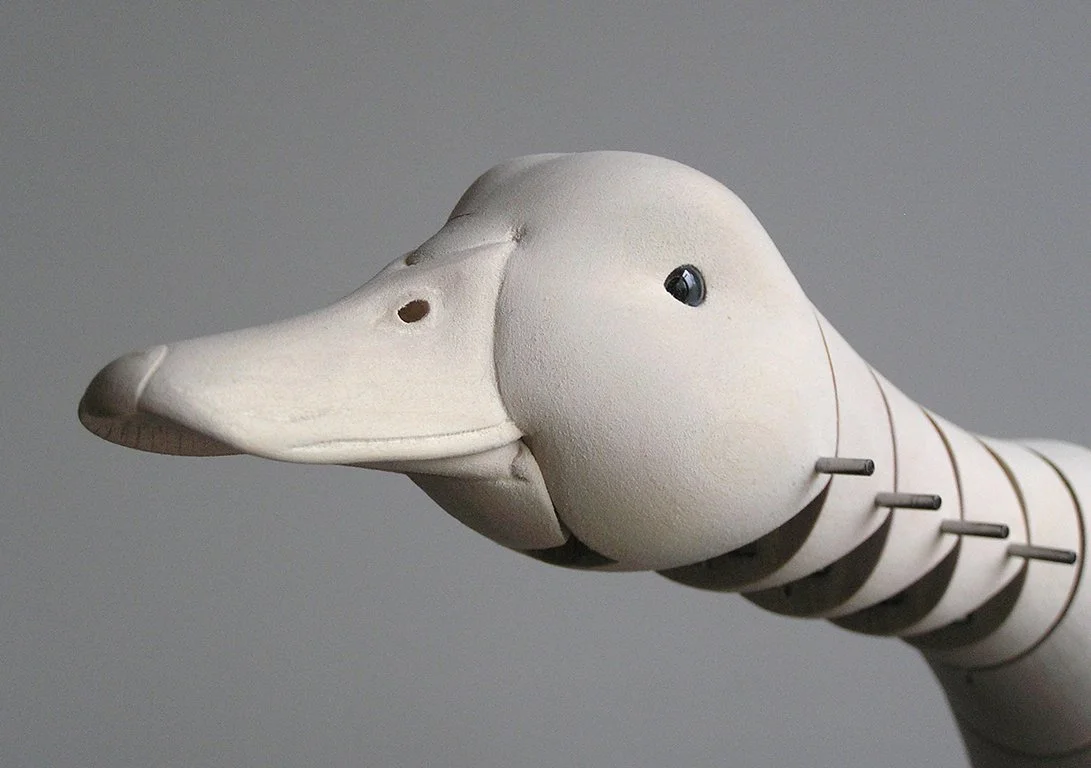
The neck has four movements each operated by its own cable. One cable flexes the lower neck, one flexes the upper neck, one swivels the neck at its center and one opens the beak.
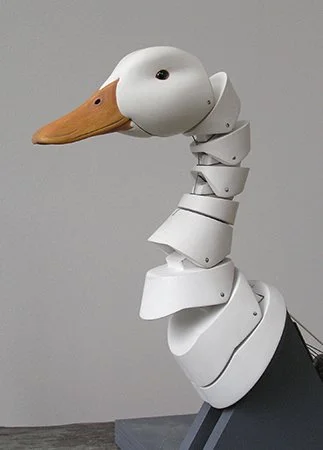
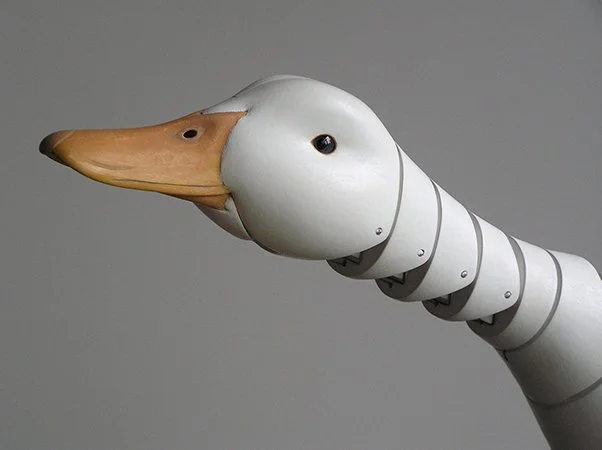
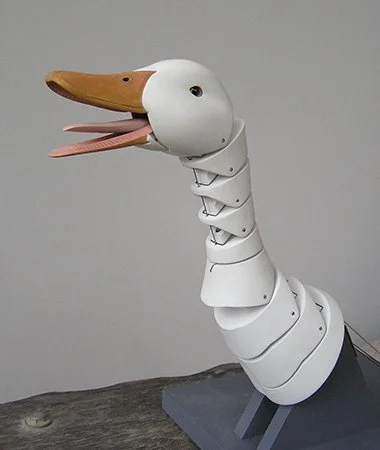
The Wing:
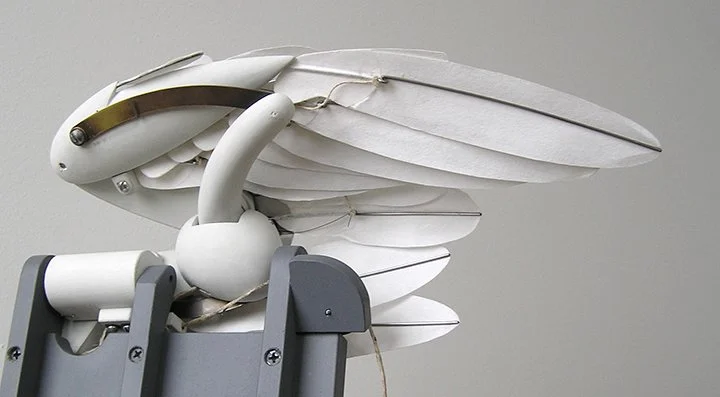
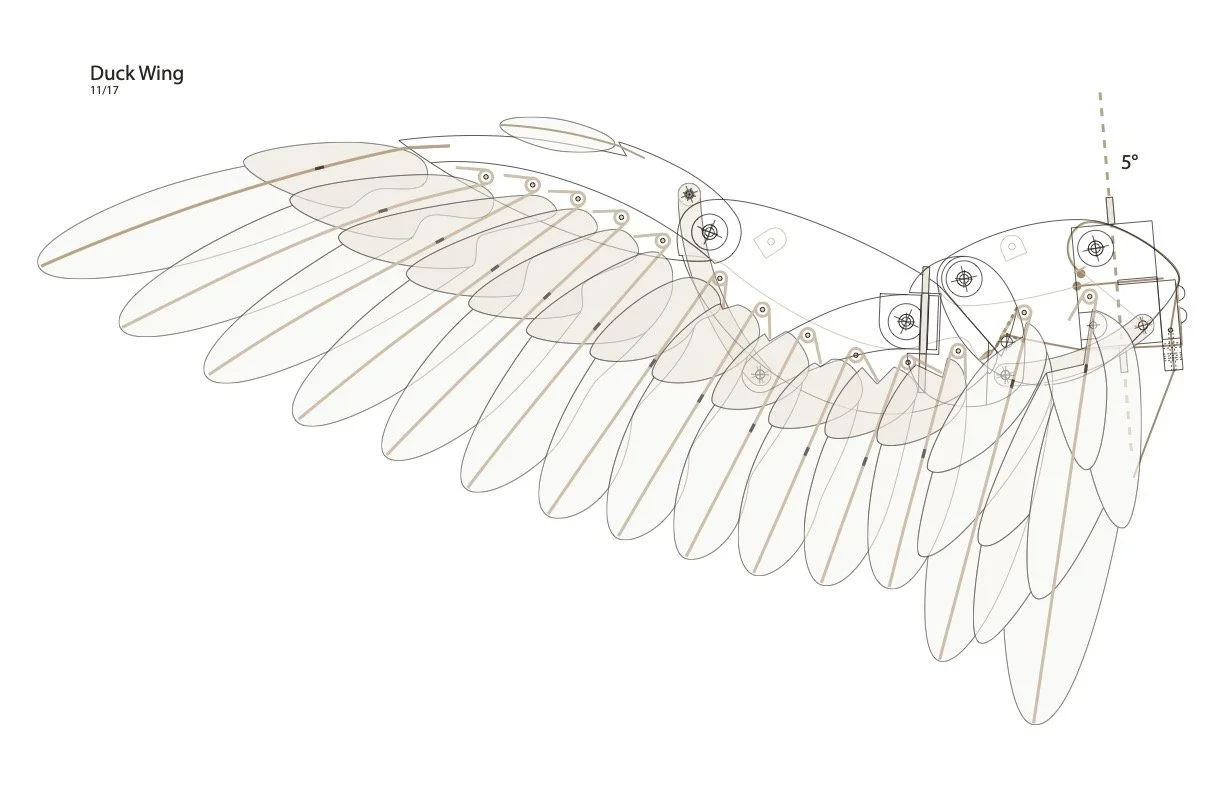
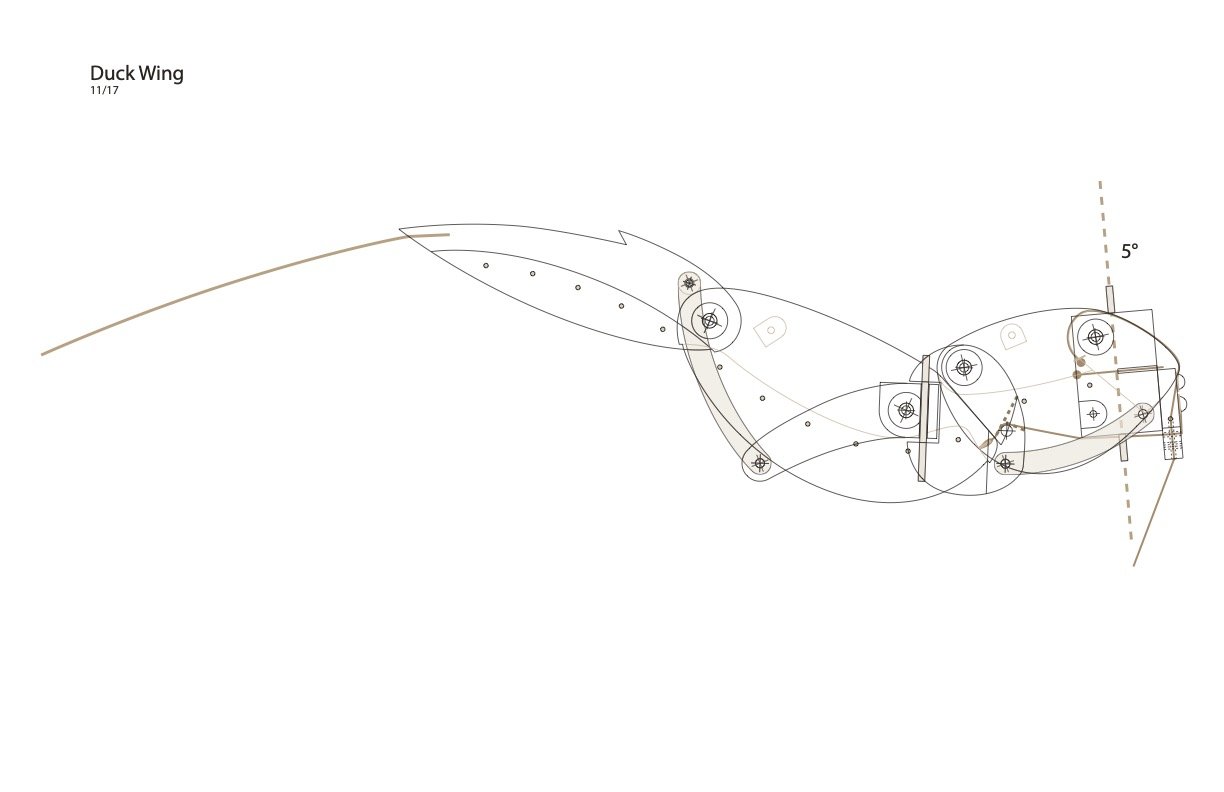
The wing opens & closes as closely as possible to a real duck’s wing. The primary, secondary & tertial feathers each fan separately. One cable opens the wing, a second cable flaps the wing up & down.
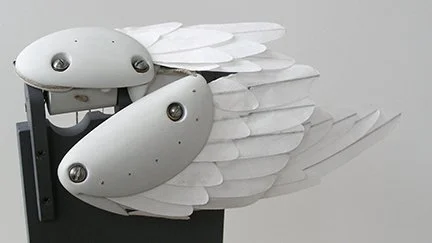
Since these photos & video were taken I’ve once again rebuilt the wing. This time to alter the geometry somewhat for a more accurate position of the primary feathers when closed.
Also, the wing’s closing method needed to change. By making the central spring strong enough to hold the wing closed, it was directly conflicting with the ability to easily pull the wing open. I was able to add a small lever that engages as the wing closes to hold it closed but disengages as the wing opens.
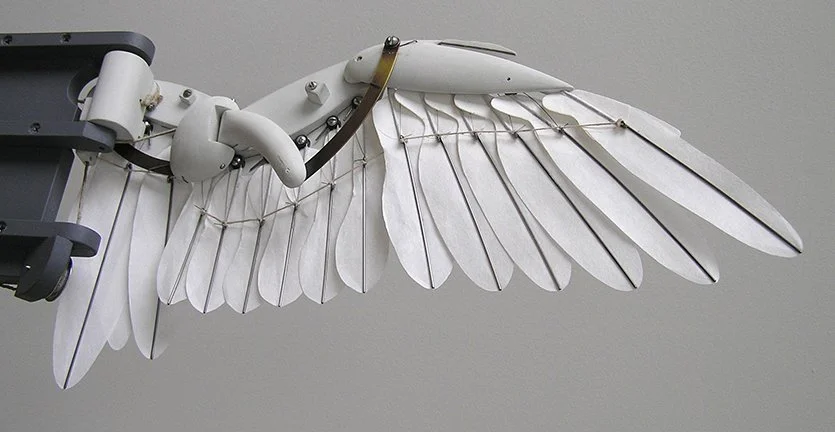
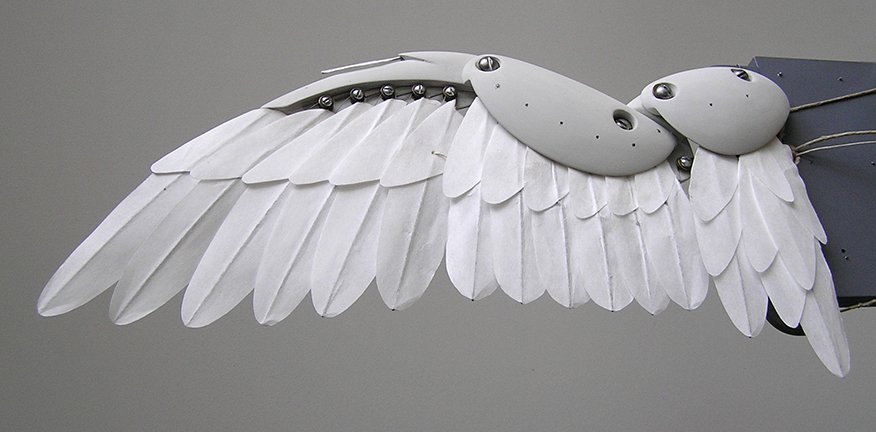
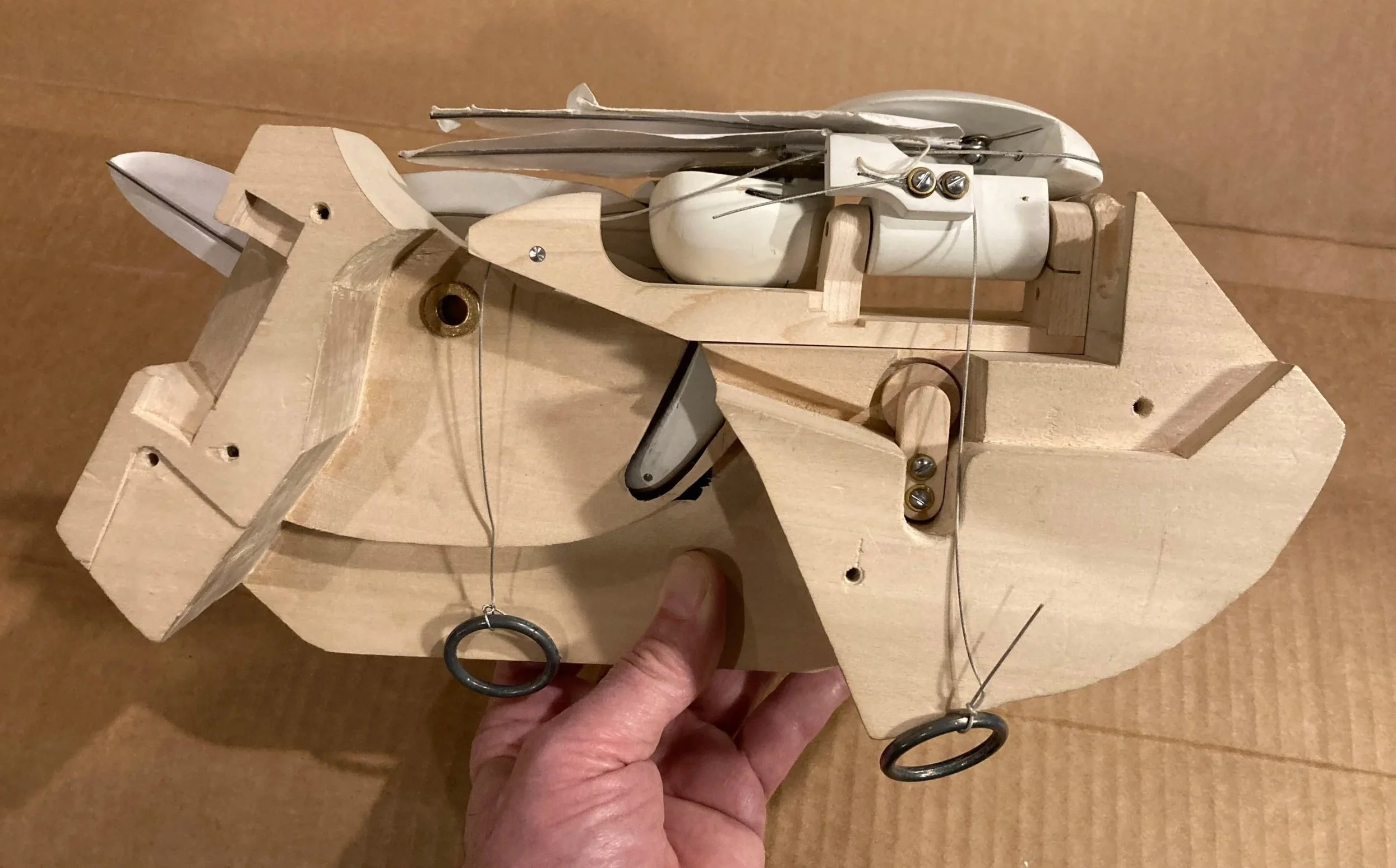
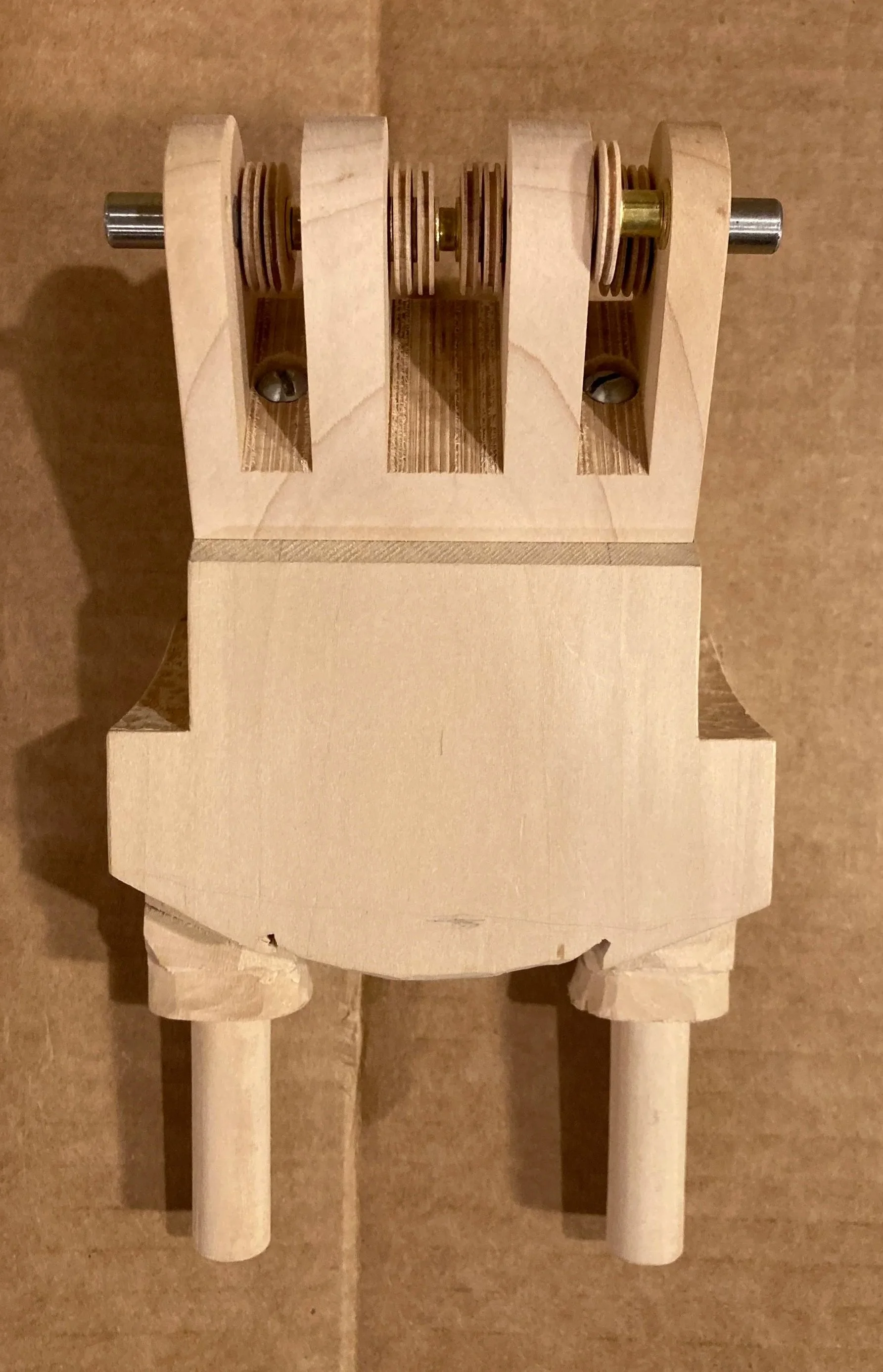
Attaching the Neck, Wings, Legs & Tail to the Duck’s Body:
It took some experimentation to find the right angle and placement for the Duck’s Neck in relation to the Wings and the Body. The Body is in two parts, front & back. The Neck is attached to the Body’s back by an angled support bracket. The Legs pivot at the hips and contain nine pulleys, one for each of the movements within the Duck. The Tail’s pivot is attached to the rear half of the Body. Viewed from the top, the wing brackets are angled toward the tail. It took some time to relief carve the Body to allow the Wing to close into it.
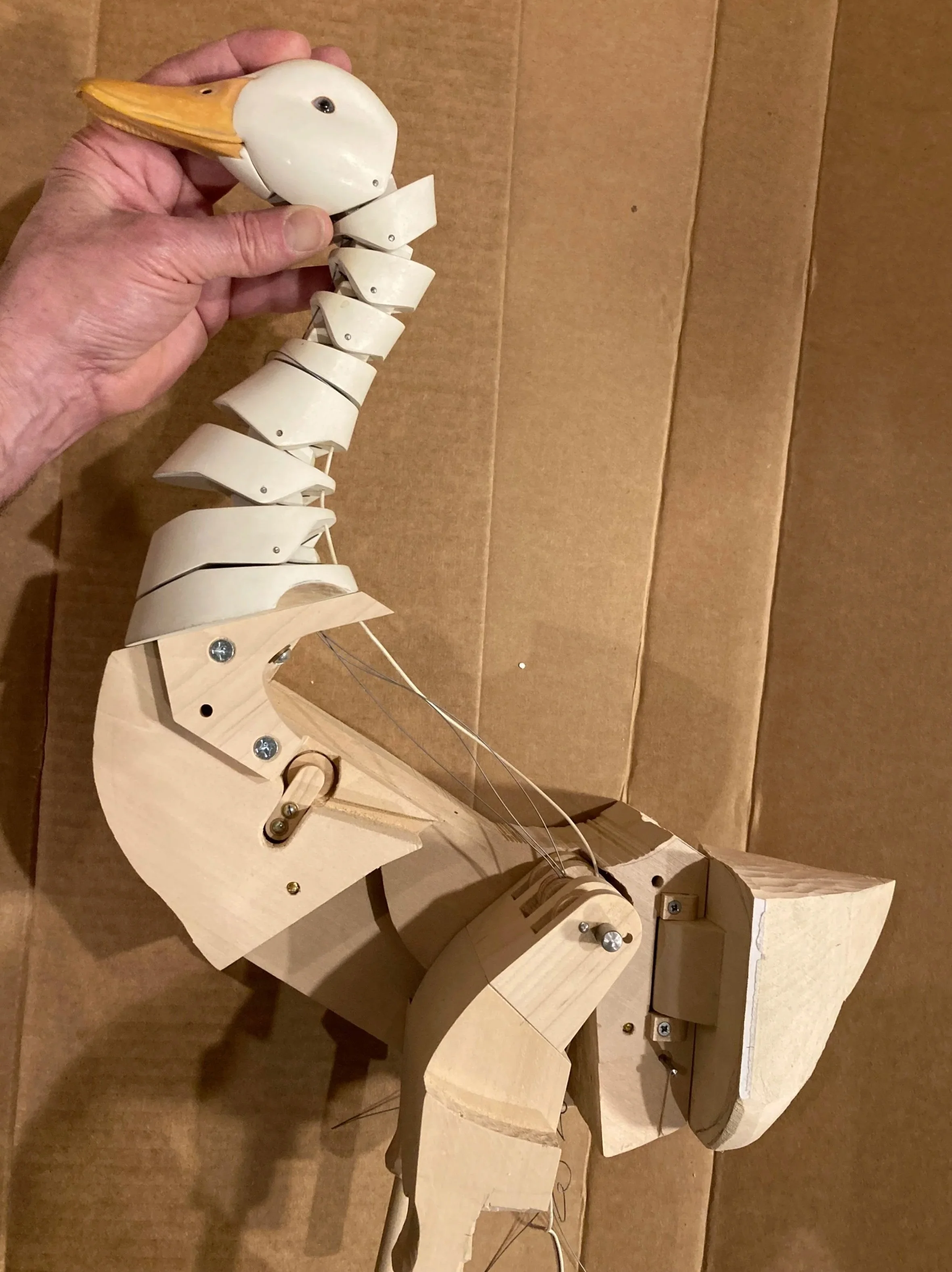
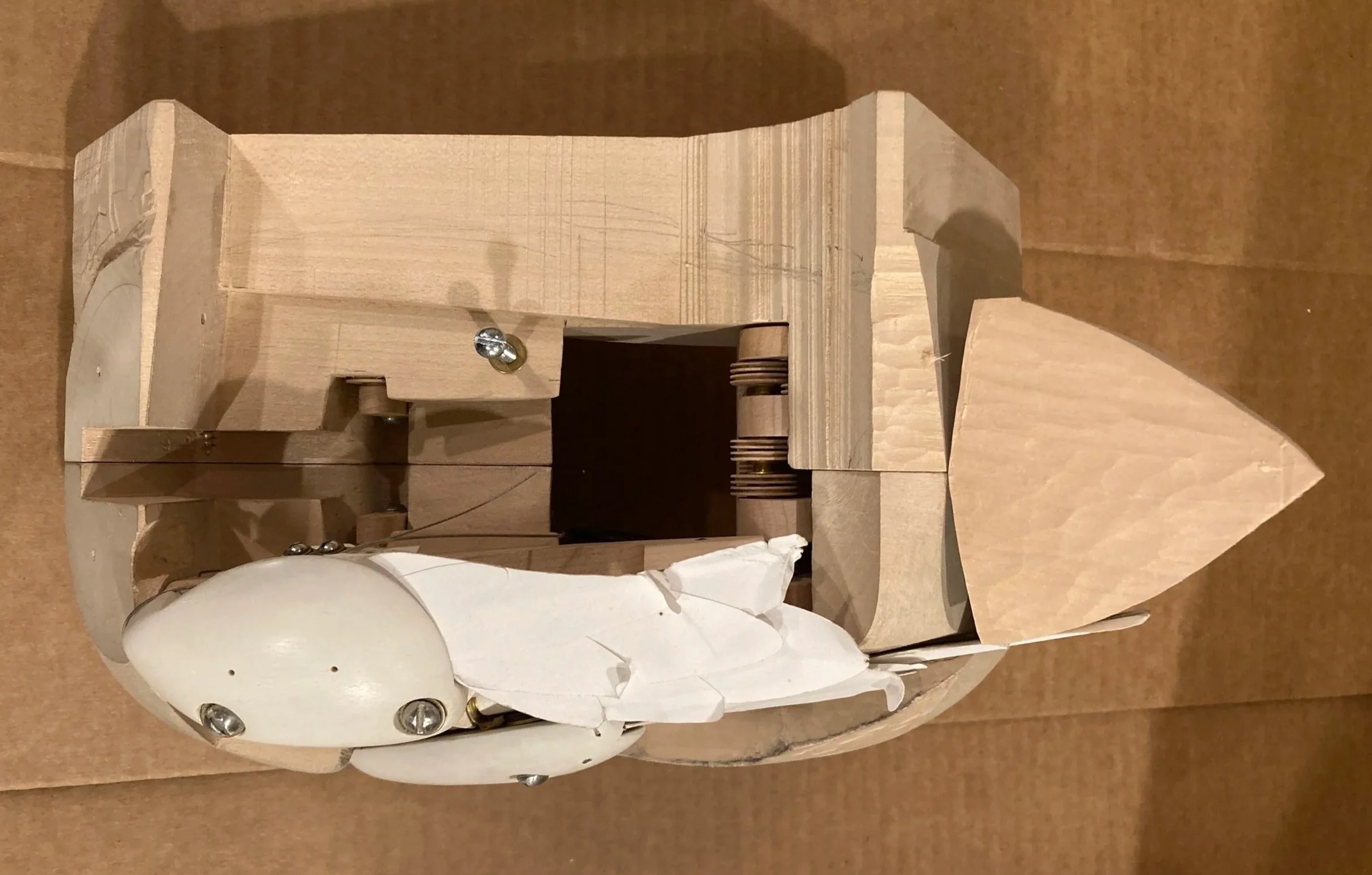
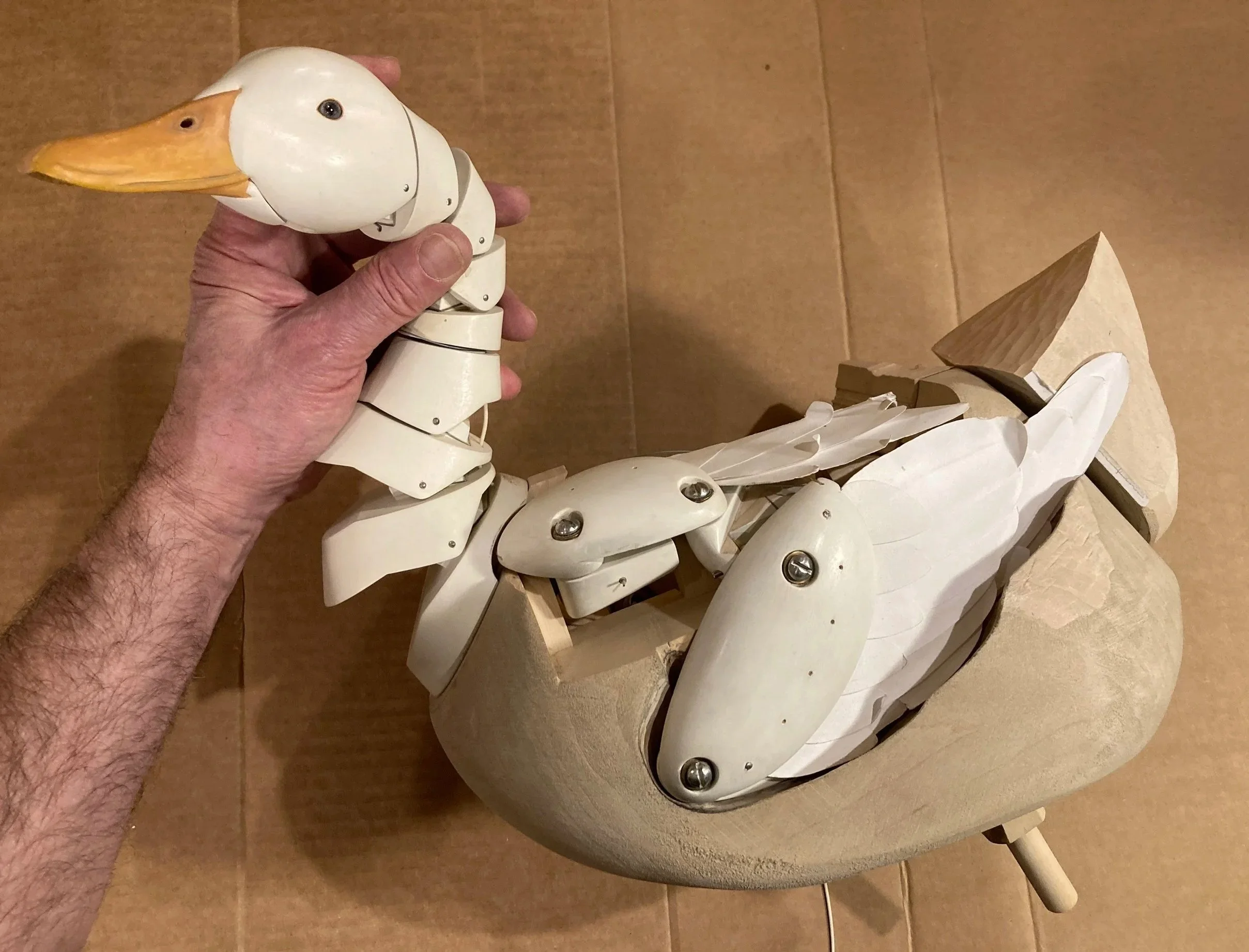
11/2017
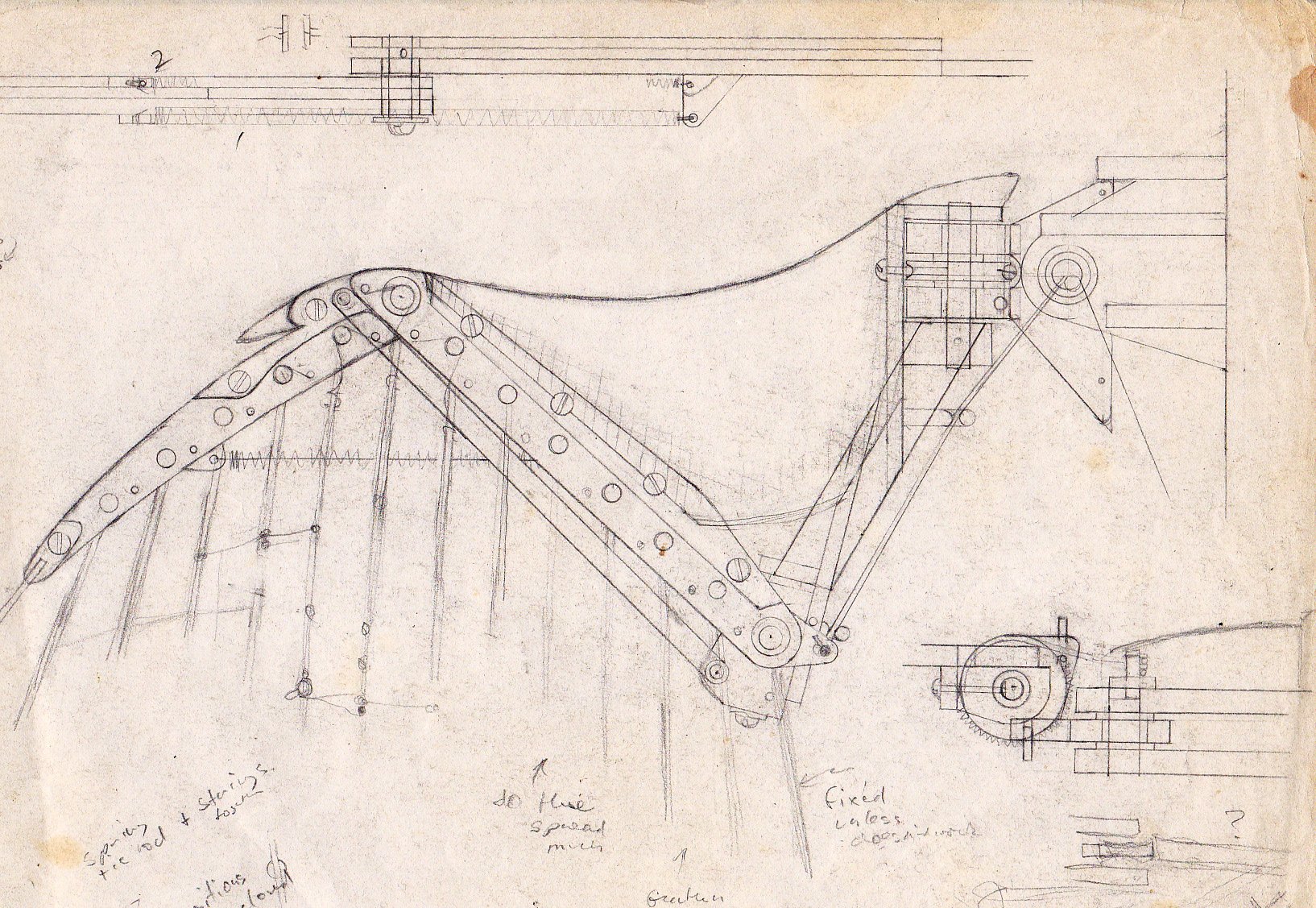
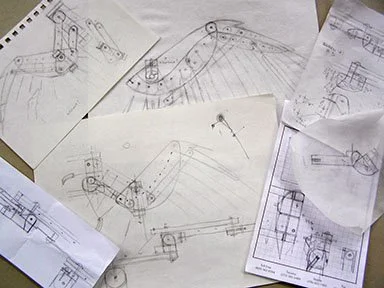
Working drawings of the wing and a diagram of the overall concept.
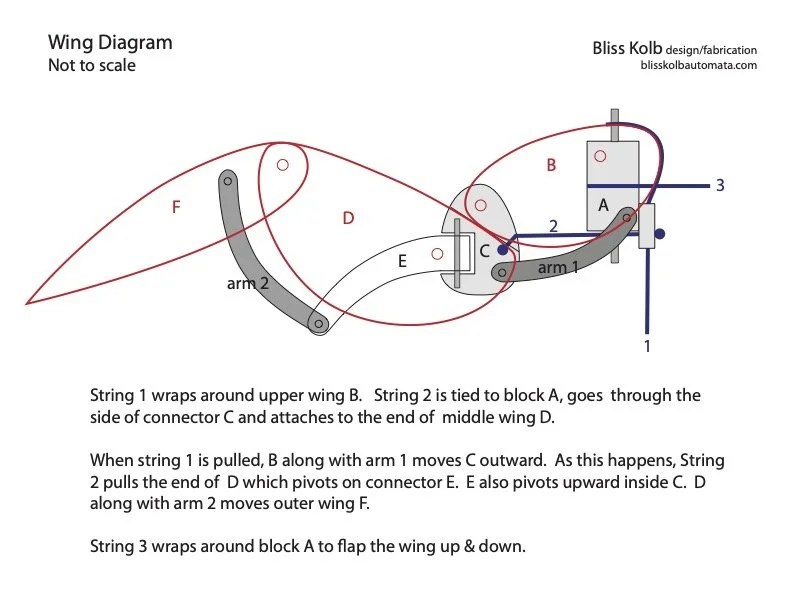
12/2016
Neck carved and ready for paint.
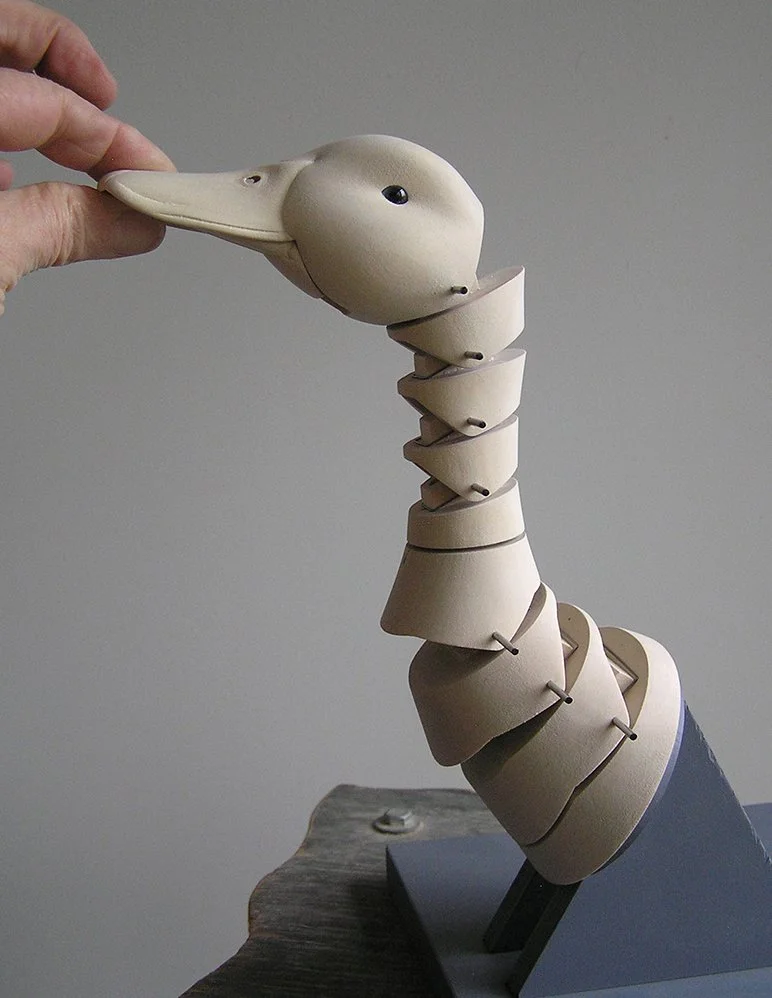
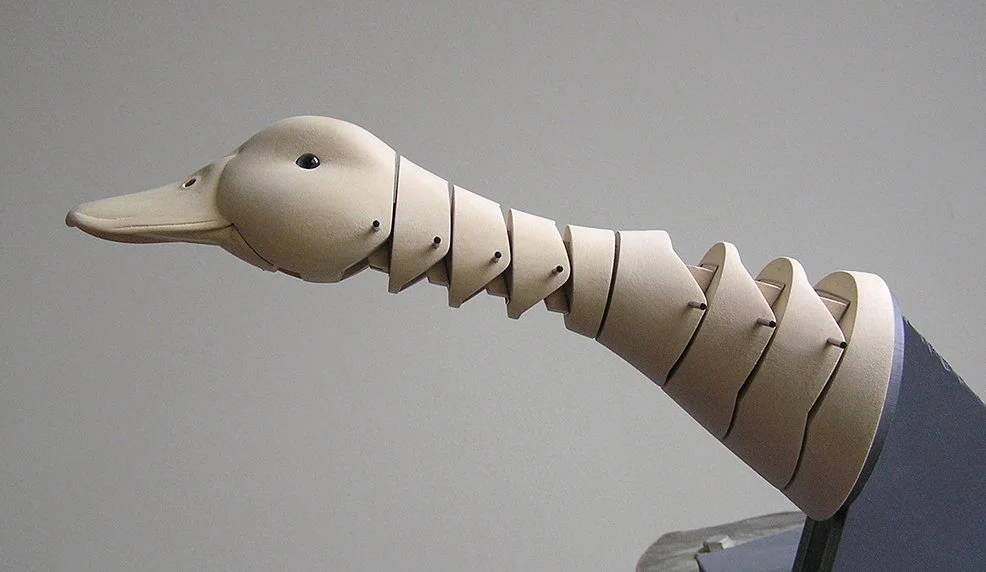
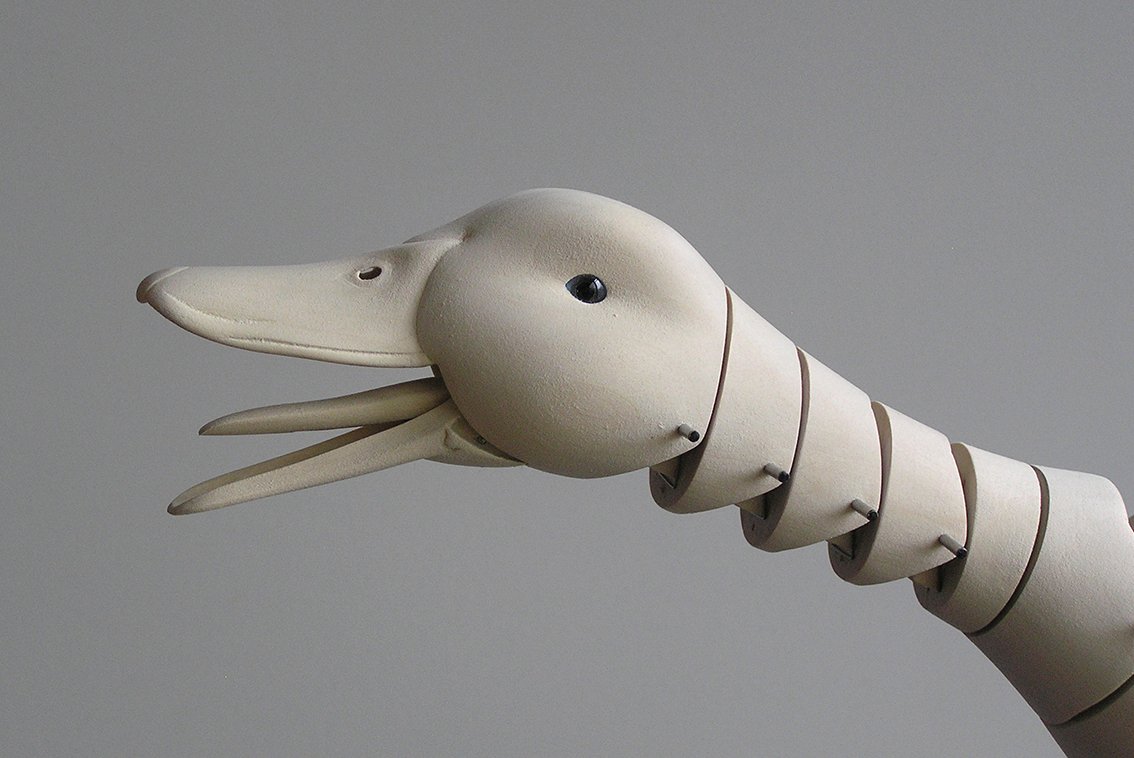
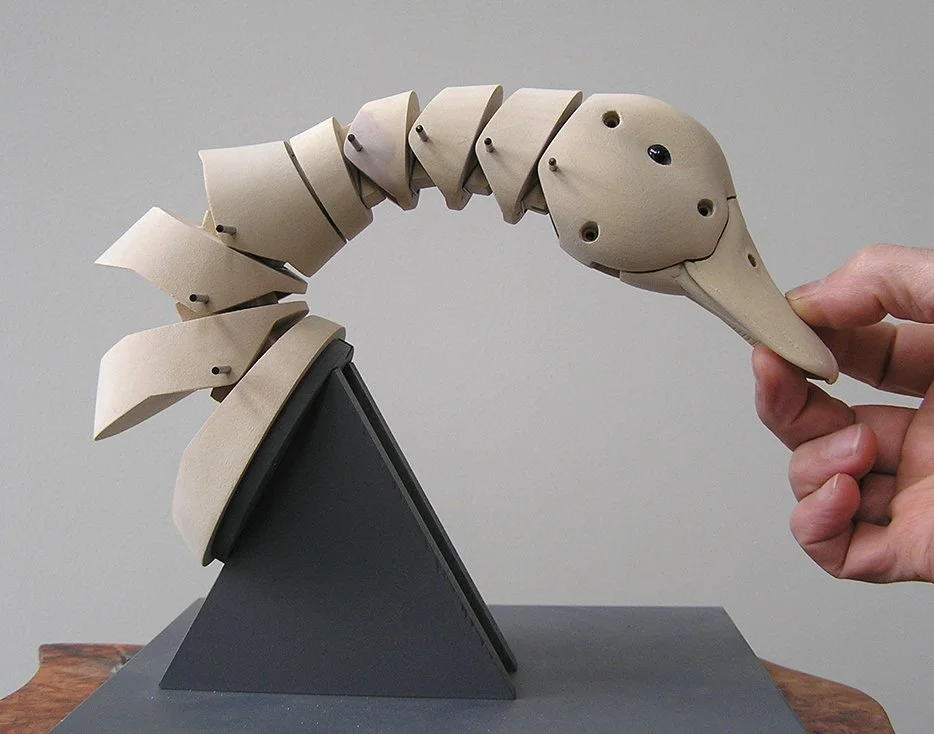
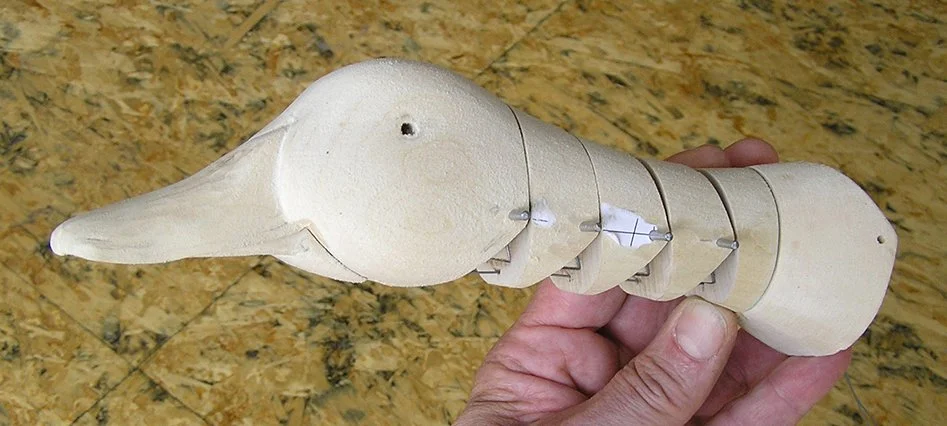
8/2016
Upper neck carved.
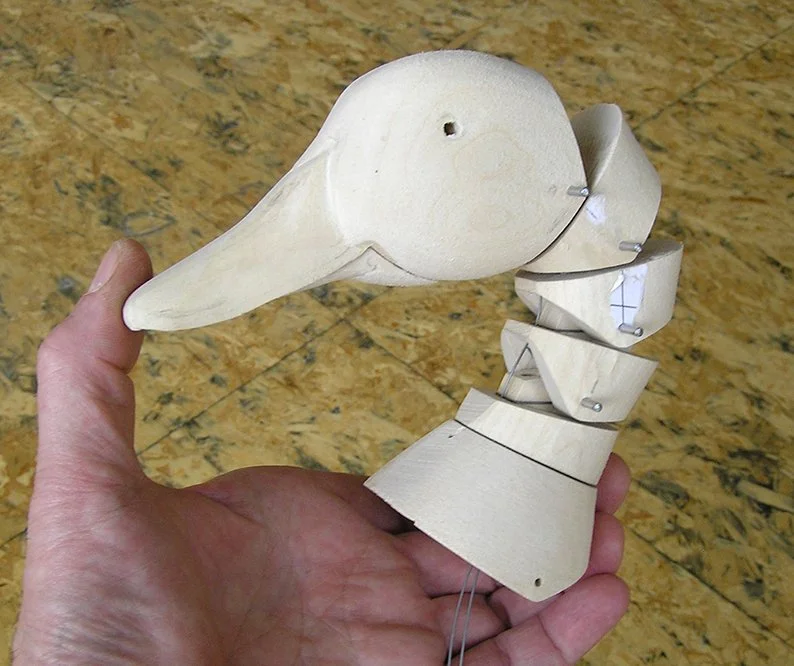
8/2016
Neck design is revised and ready to build.
After making most of a prototype for the upper neck, I realized the overall size was too small. I was able to measure a frozen duck specimen at the Burke museum to make sure the proportions & measurements are accurate. Other design changes were made to reflect what I learned building the prototype.
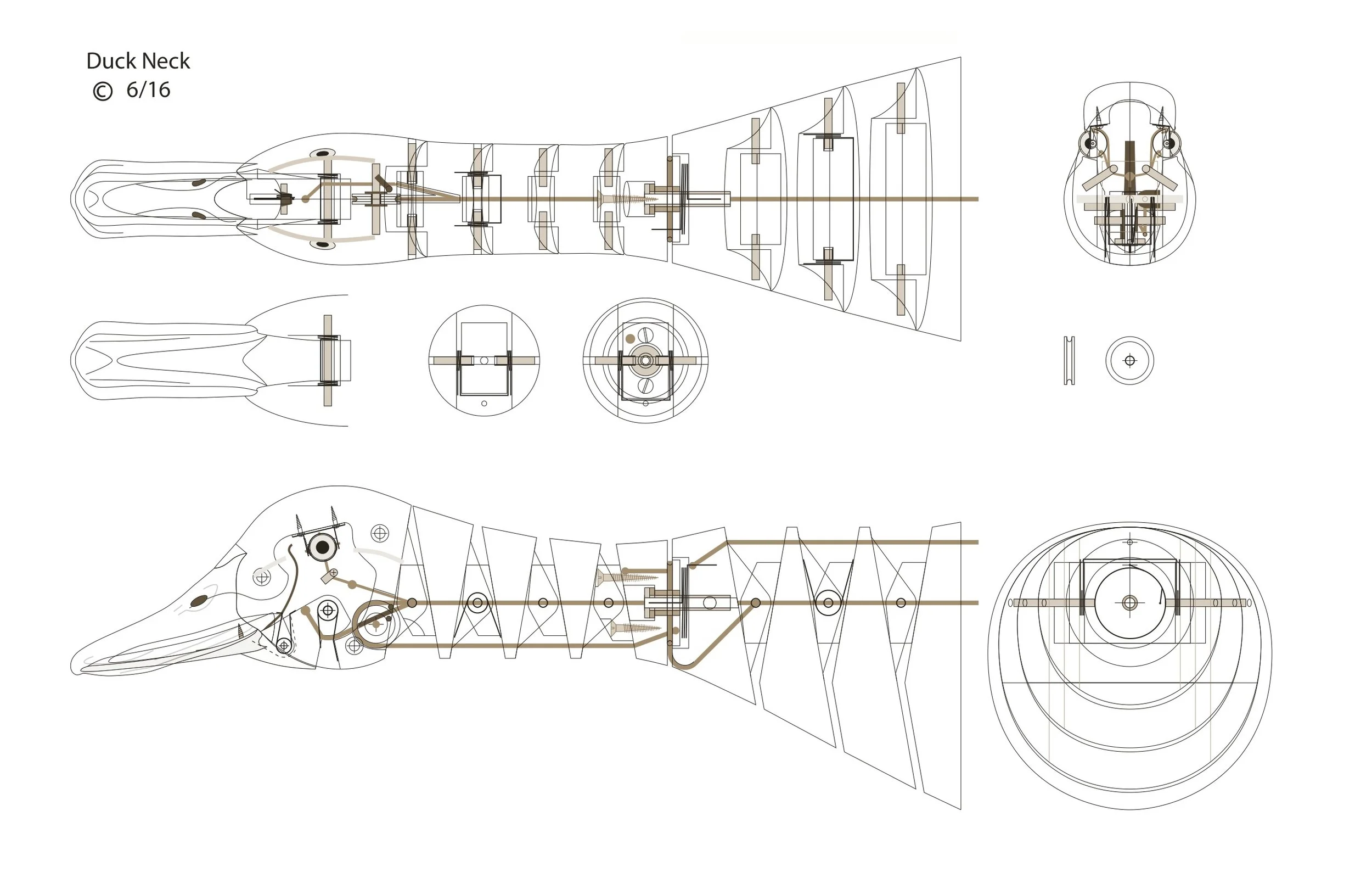
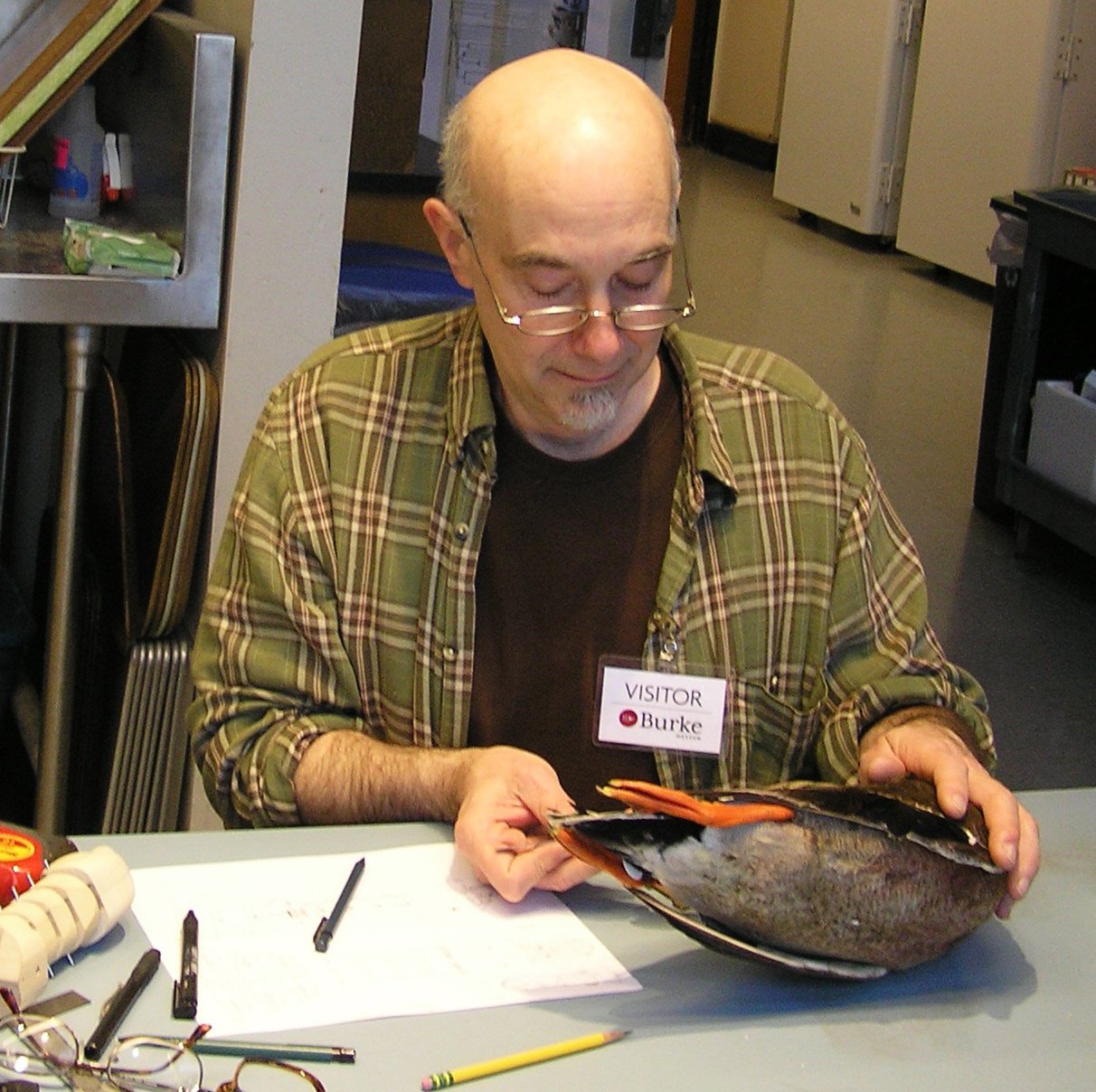
10/2015
A finished neck design.
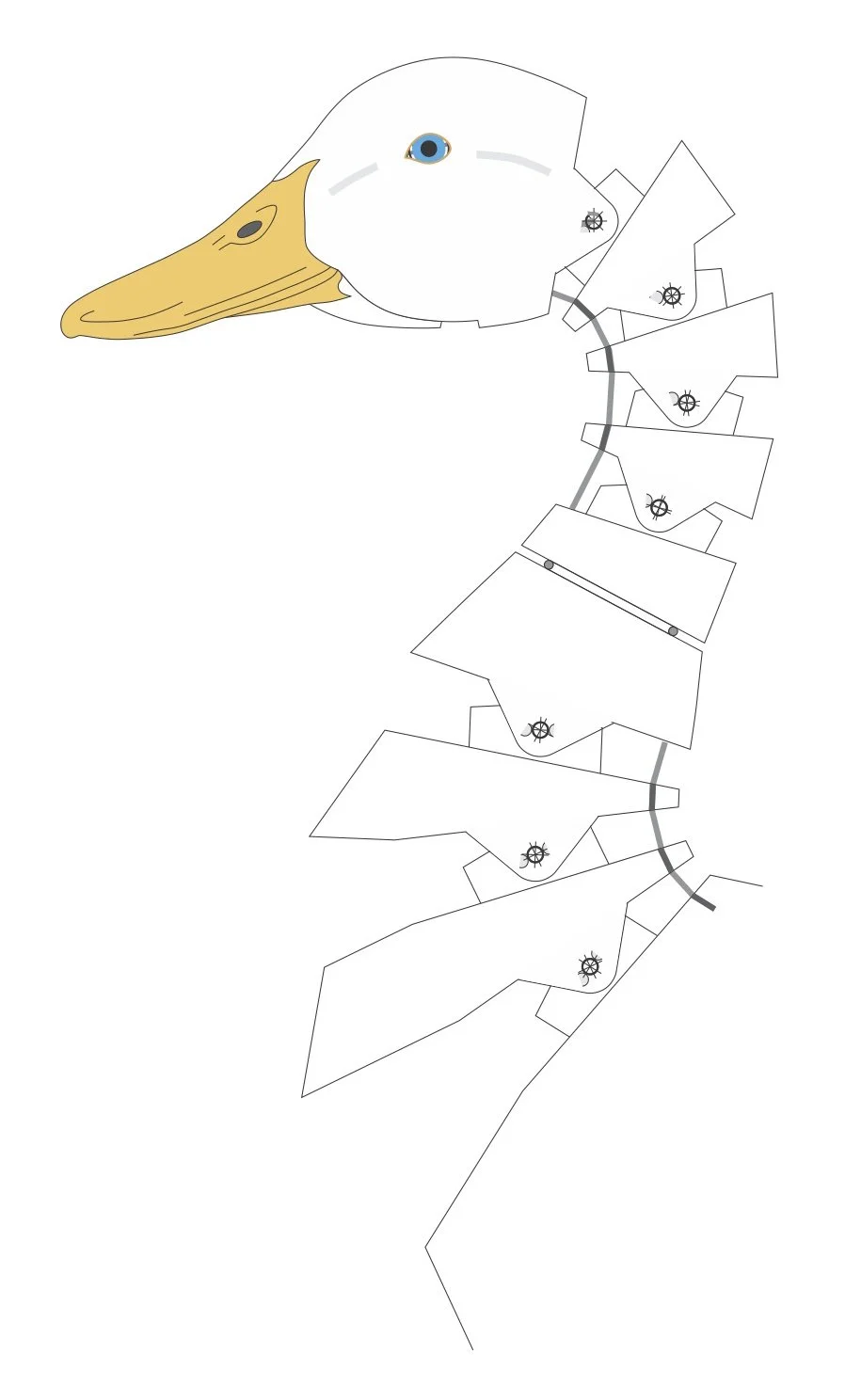
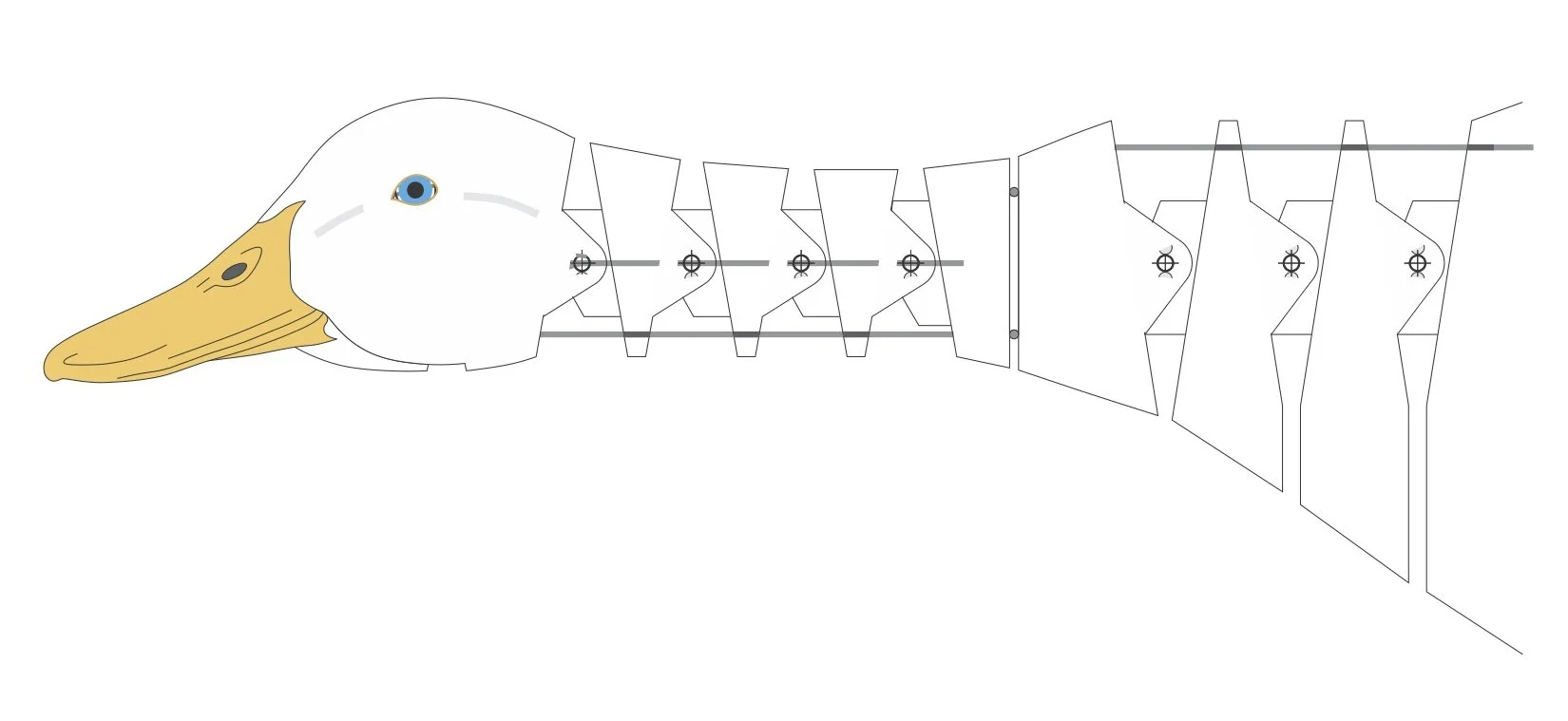
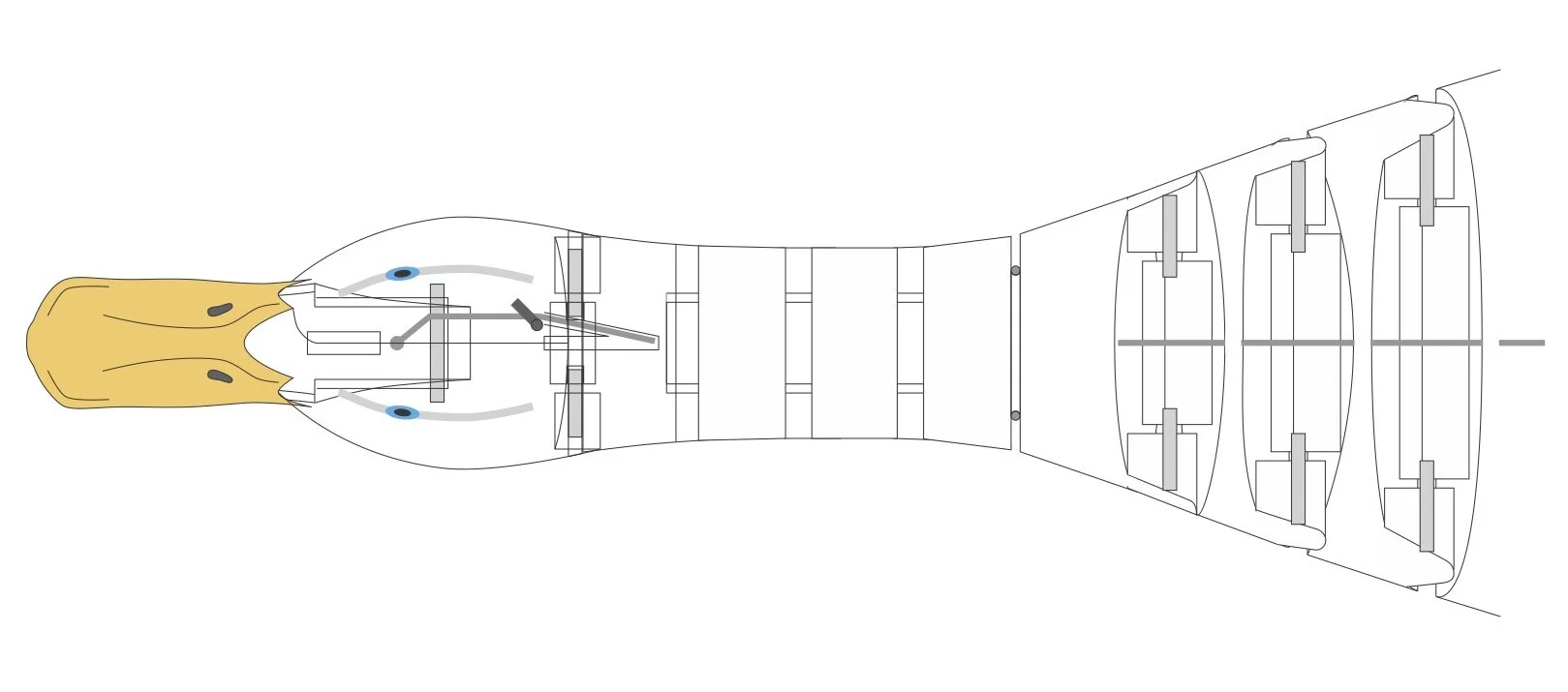
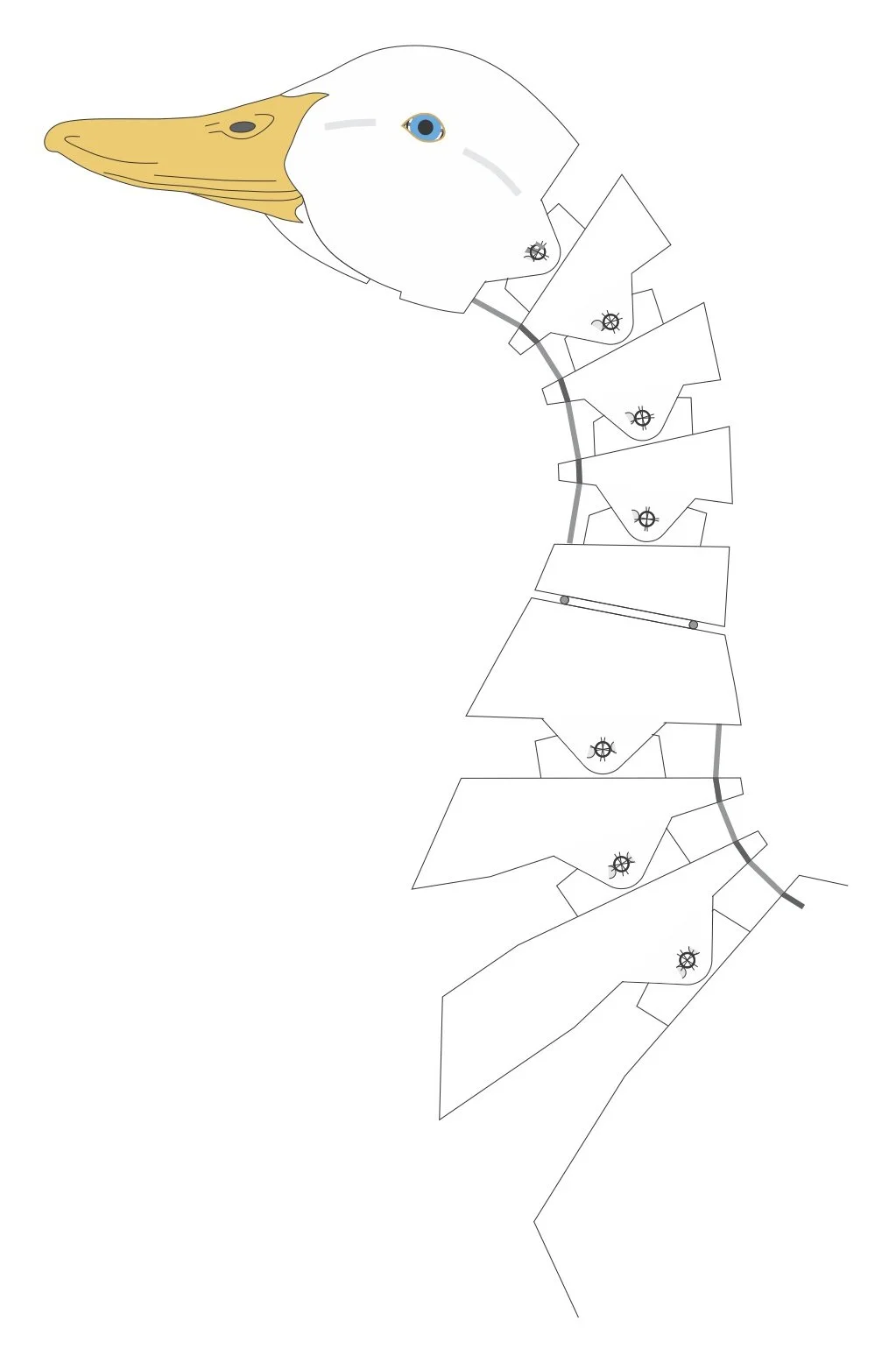
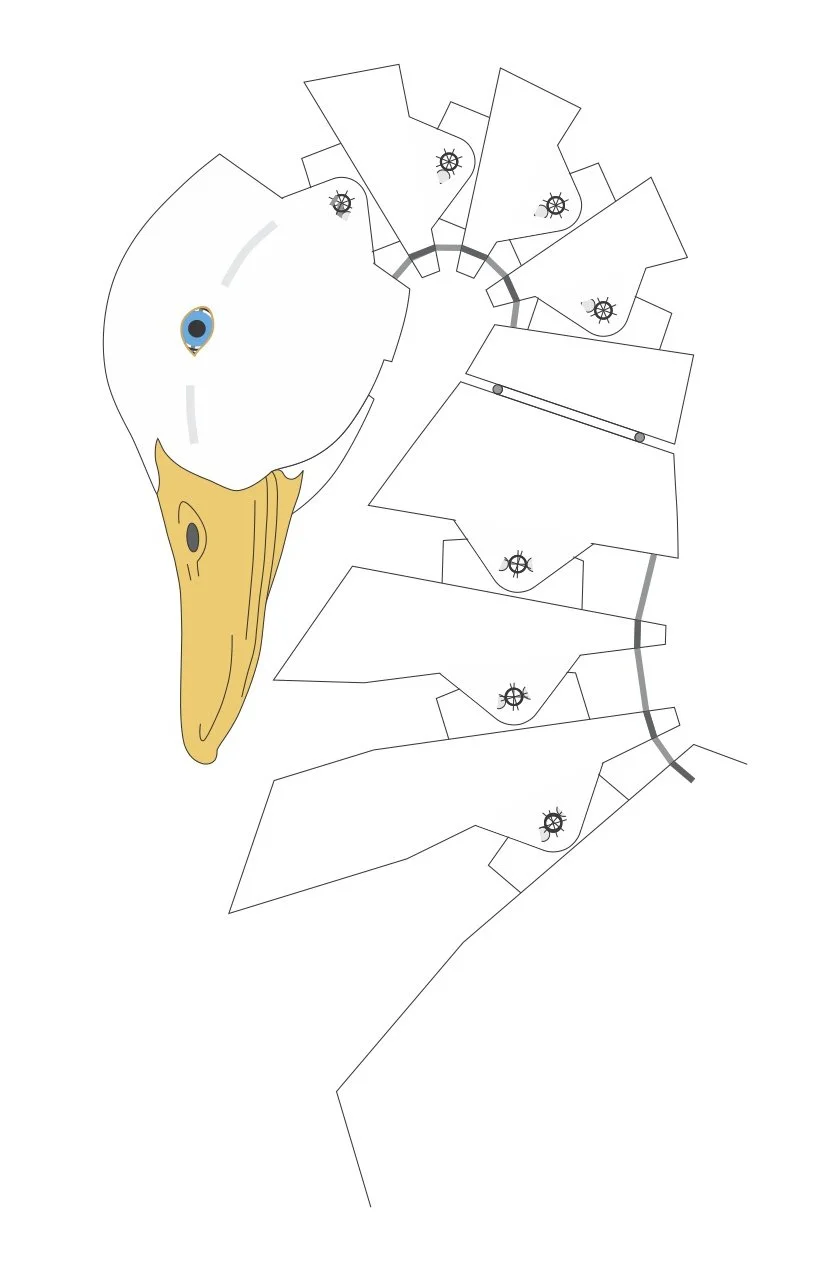
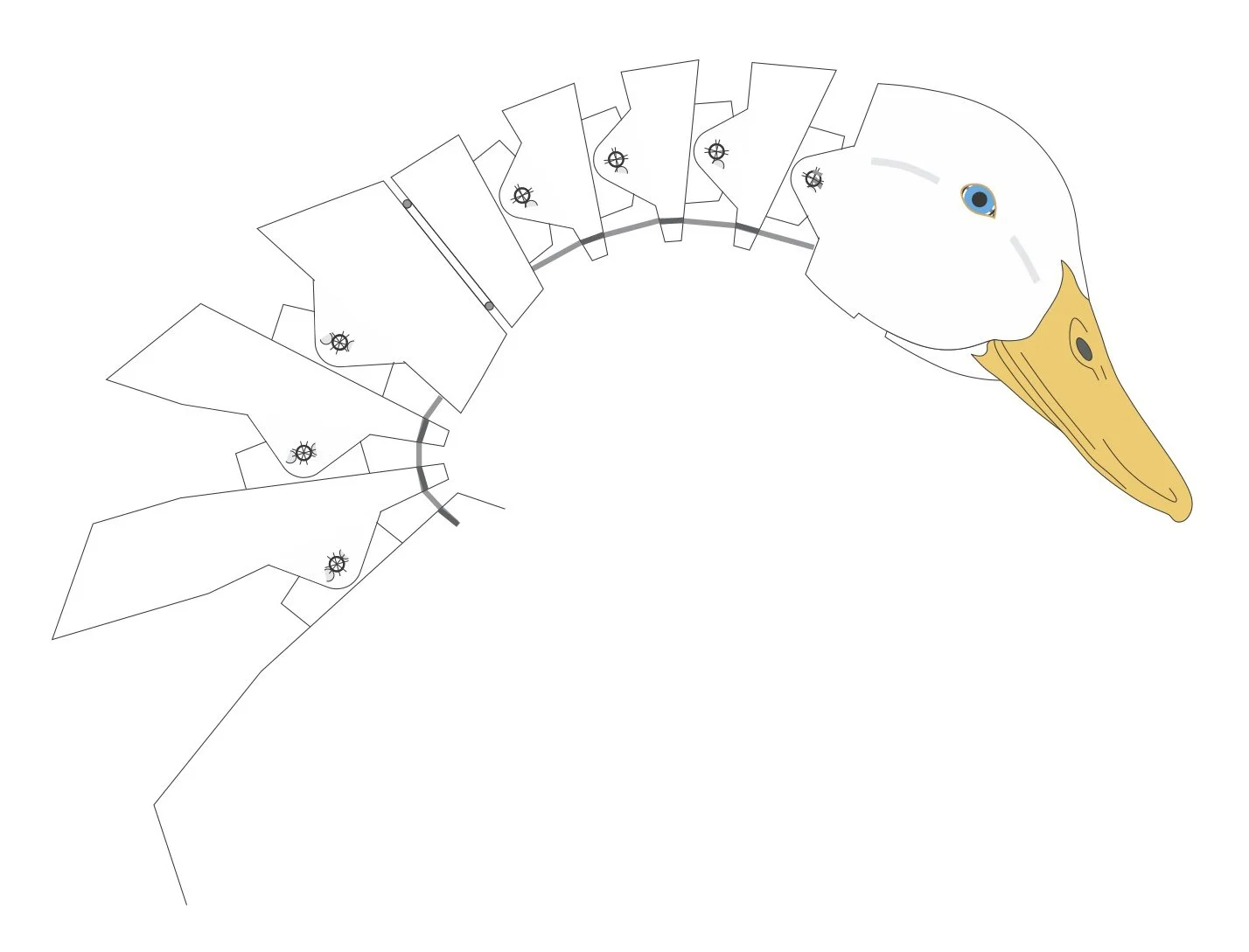
8/2013
The wing is painted & temporary aluminum arms have been replaced with finished brass arms.
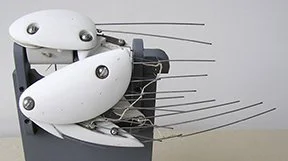
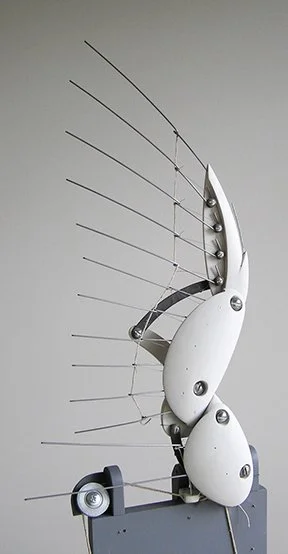
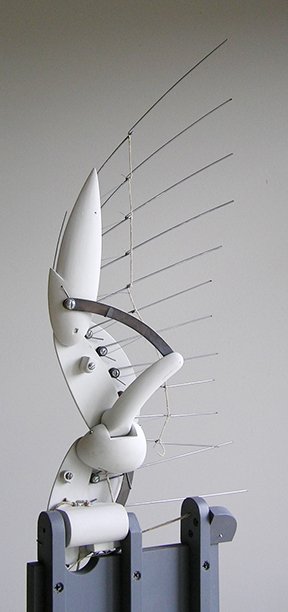
8/2013
Feathers on the wing.
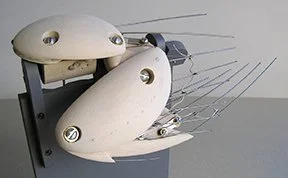
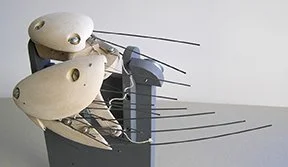
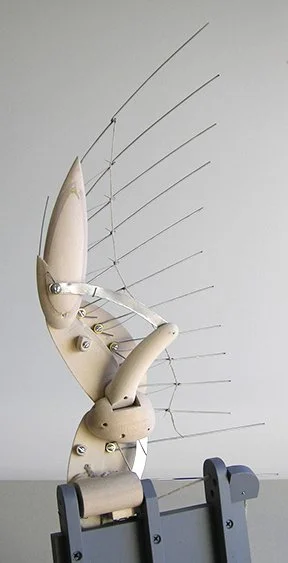
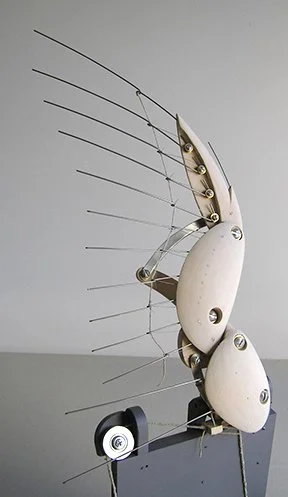
3/2013
A working wooden wing model.
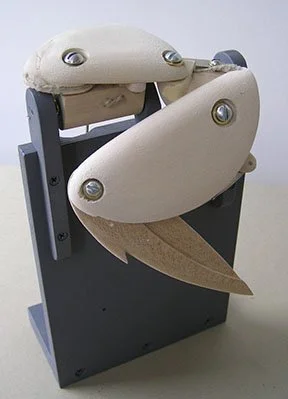
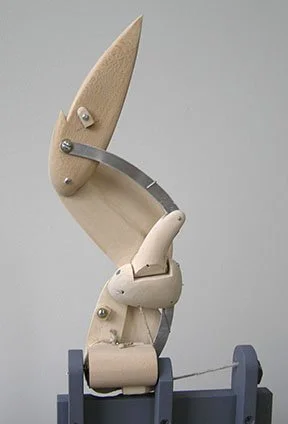
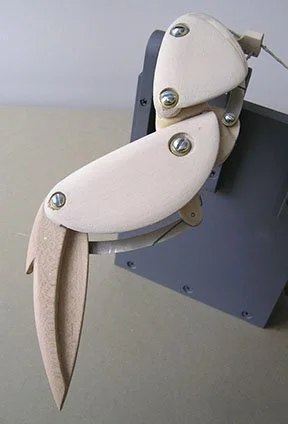
12/2012
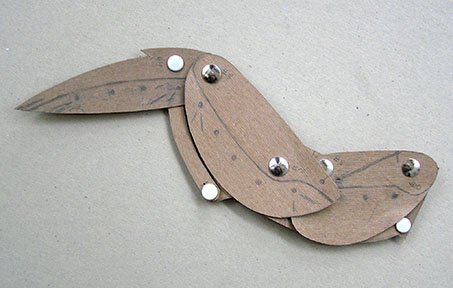
The start of the wings. A working cardboard model is made from the result of sketches going back at least to the 1980’s. The goal: to make a mechanical duck’s wing that imitates the movements & geometry of a real duck’s wing, opening & closing, with the least controls.